Practical answers about Canada eTA applications, status checks, entry requirements, and trip planning — in plain language, checked against official sources.

CANADA ETA · ENTRY · TRAVEL
CANADA ETA · ENTRY · TRAVEL
Practical answers about Canada eTA applications, status checks, entry requirements, and trip planning — in plain language, checked against official sources.
The short answer: more than 50 countries and territories are fully visa-exempt on Canada’s eTA list, from Andorra to the United Arab Emirates. If your passport is on that list and you are flying to Canada, you apply for an eTA instead of a visitor visa. If it is not on the list, you generally need a visa — though 17 visa-required countries, including Mexico, Brazil and Indonesia, have a separate conditional eTA route open to some of their citizens. ...
The short answer: a German citizen who is flying to Canada needs an eTA, the electronic travel authorization from Immigration, Refugees and Citizenship Canada (IRCC), and it costs 7 CAD. The detail that trips up German applicants is the country code: in the application form, Germany is listed as “D (Germany, Federal Republic Of)”, a single letter, and not as DEU. Choose the code that matches the one printed on your passport information page. ...
The short answer: an Austrian citizen who is flying to Canada needs an eTA, the electronic travel authorization from Immigration, Refugees and Citizenship Canada (IRCC), and it costs 7 CAD. The Government of Canada gives Austrian passport holders their own instructions: most Austrian passport numbers are 8 characters long, made of 1 letter and 7 numbers. Include any preceding characters, remove any spaces and do not enter special characters such as a hyphen. ...

The short answer: the official Canada eTA application is the one on canada.ca, run by Immigration, Refugees and Citizenship Canada (IRCC), and the only fee it charges is the 7 CAD government fee. A private service can help you complete the same form, but the decision is always made by IRCC, and any extra charge on top of 7 CAD is that service’s own fee. Either way, you end up with the same thing: an eTA linked electronically to your passport. ...
The short answer: if you hold a British passport and you are flying to Canada, you need an eTA before you board. The government fee is 7 Canadian dollars, paid once when you submit the form, and most applications are decided within minutes. Generally you do not need an eTA if you arrive by car, bus, train or cruise ship, and you cannot get one if you are travelling on a Canadian passport. ...

The short answer: four things decide whether your eTA works, and everything else on the form is routine. Get the passport number exactly right, character for character. Pick the country code that is printed on your passport rather than the one you would guess — Germany is D, not DEU. Type your email address correctly, because every message about your application goes there and nowhere else. And finish the form in one sitting with everything already on the desk, because nothing is saved and the session expires. None of the four can be corrected after you pay. ...

The short answer: nothing was wrong with your answers — the session expired. The eTA form cannot be saved, there is no draft and no resume link, and when the session dies you lose the entire form, not just the last screen. There is nothing to recover on IRCC’s side. You have to fill it in again. The fix is preparation, not speed. Put the passport, the payment card, your employer and home addresses and your travel dates on the desk before you open the form, then do it in one sitting. Our first Canada eTA application checklist is that list, and the field-by-field guide to the application form shows you every question before you meet it, so the second attempt takes minutes. ...

The short answer: “Transaction Approved” means your card was charged. It is not your eTA and it is not a decision. Your application has been submitted and paid for; nobody has looked at it yet. The answer comes later, by email only — so check your spam folder. Save that screen before you close the tab. IRCC does not let you print it later and will not send you a copy. Print it, save it as a PDF, or screenshot it now. ...
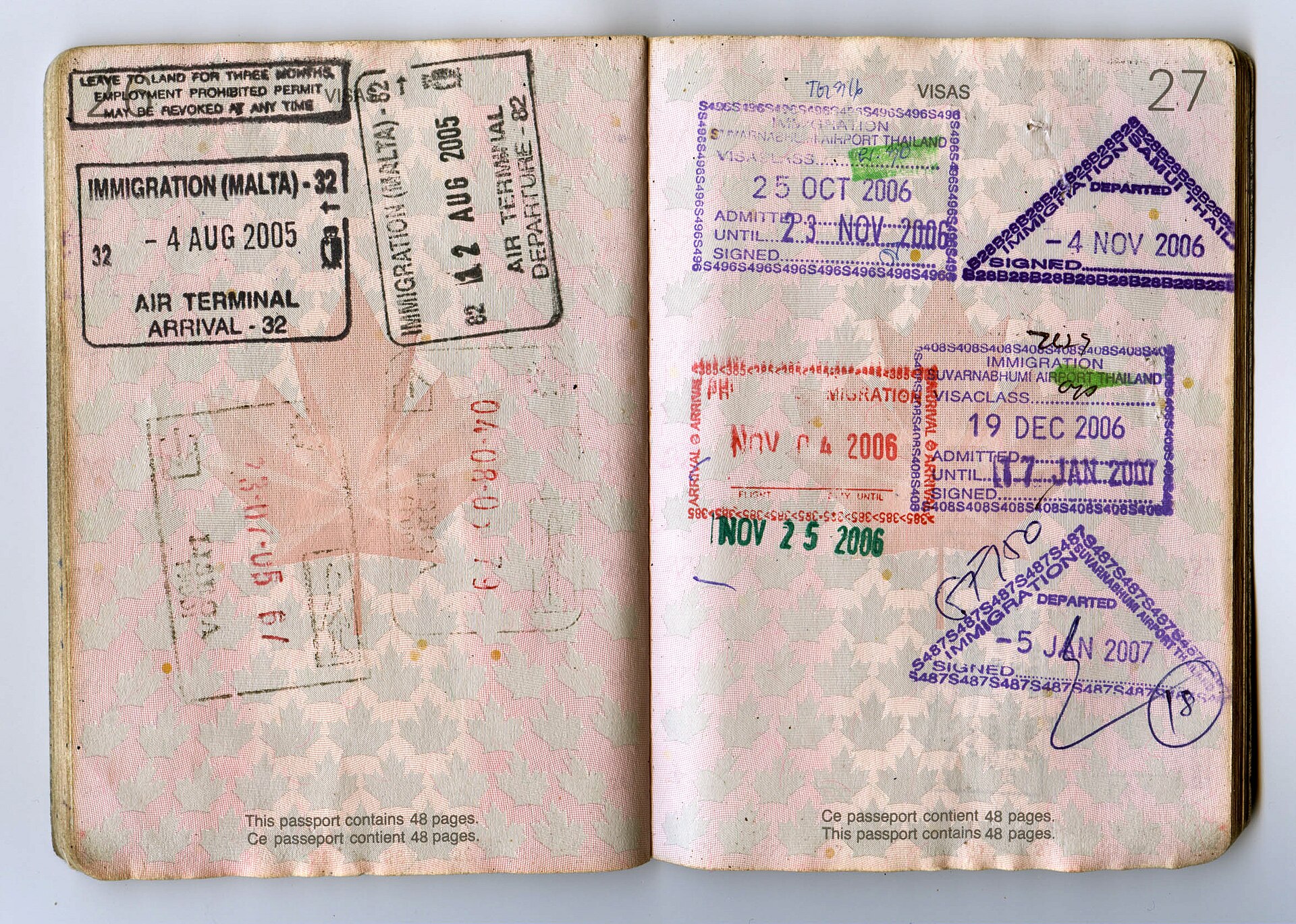
The short answer: open your passport to the photo page, find the field labelled “Code”, “Issuing country”, “Authority” or “Country code”, and select that exact value in the dropdown. Do not work it out from the name of your country — Germany is listed as D, not DEU, and the United Kingdom has six separate entries. And being in the list means nothing about eligibility: it holds all 214 passport-issuing authorities in the world, including countries whose citizens need a visa rather than an eTA. ...
The short answer: if you hold a normal passport, select “Passport - ordinary/regular” and move on. The only people who need to think about this field are those holding a government, emergency, refugee or non-citizen travel document. And if your passport is a government one, the deciding factor is not your job title — it is the word printed on the front cover: official or service. The document you name here is the one your eTA attaches to, so it must be the one you will physically hand over at check-in. The rest of the form is covered in our field-by-field guide to the Canada eTA application, and the dropdown that comes immediately after this one in which passport country code to select. ...